Types of Robot
The field of robotics is incredibly diverse. We can categorize robots into broad types based on their physical structure and primary mode of interaction with the world.
-
Manipulators (Robotic Arms): These robots are typically fixed in place and use a series of links and joints to manipulate objects. They are the classic industrial robots and form the primary focus for the study of kinematics and dynamics in this course. Common subtypes include:
-
Articulated Robot: The most common type of industrial robot, featuring rotary joints (resembling a human arm, e.g., PUMA). These are often referred to by their joint configuration, such as a 6R robot for a 6-axis articulated arm.
-

-
-
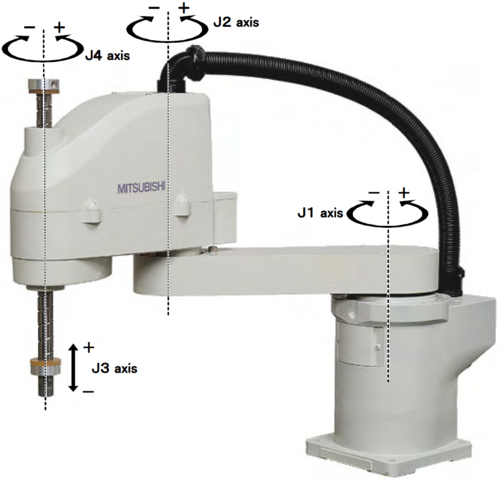
SCARA Robot: (Selective Compliance Assembly Robot Arm). Designed for high-speed, light-duty assembly tasks. It is compliant in the horizontal plane but rigid vertically.
-
-
-
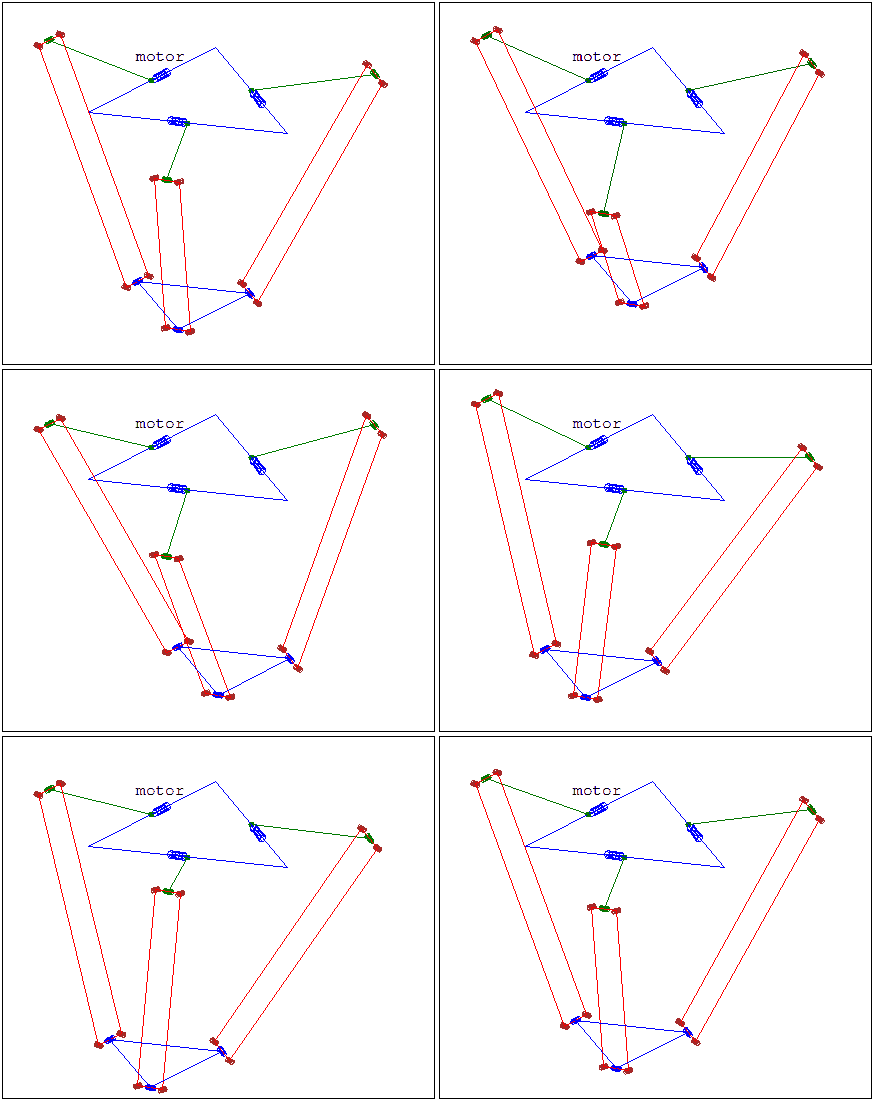
Parallel Manipulator: Characterized by closed-loop kinematic chains. The end-effector is connected to the base by several independent linkages. This design offers high rigidity, speed, and accuracy (e.g., the Delta robot).

-
-
-
Cartesian/Gantry Robot: Uses three prismatic joints, with axes that are coincident with a Cartesian coordinate system. They are often large and used for pick-and-place or CNC machining.
-

-
Mobile Robots: These robots are capable of moving through their environment.
-
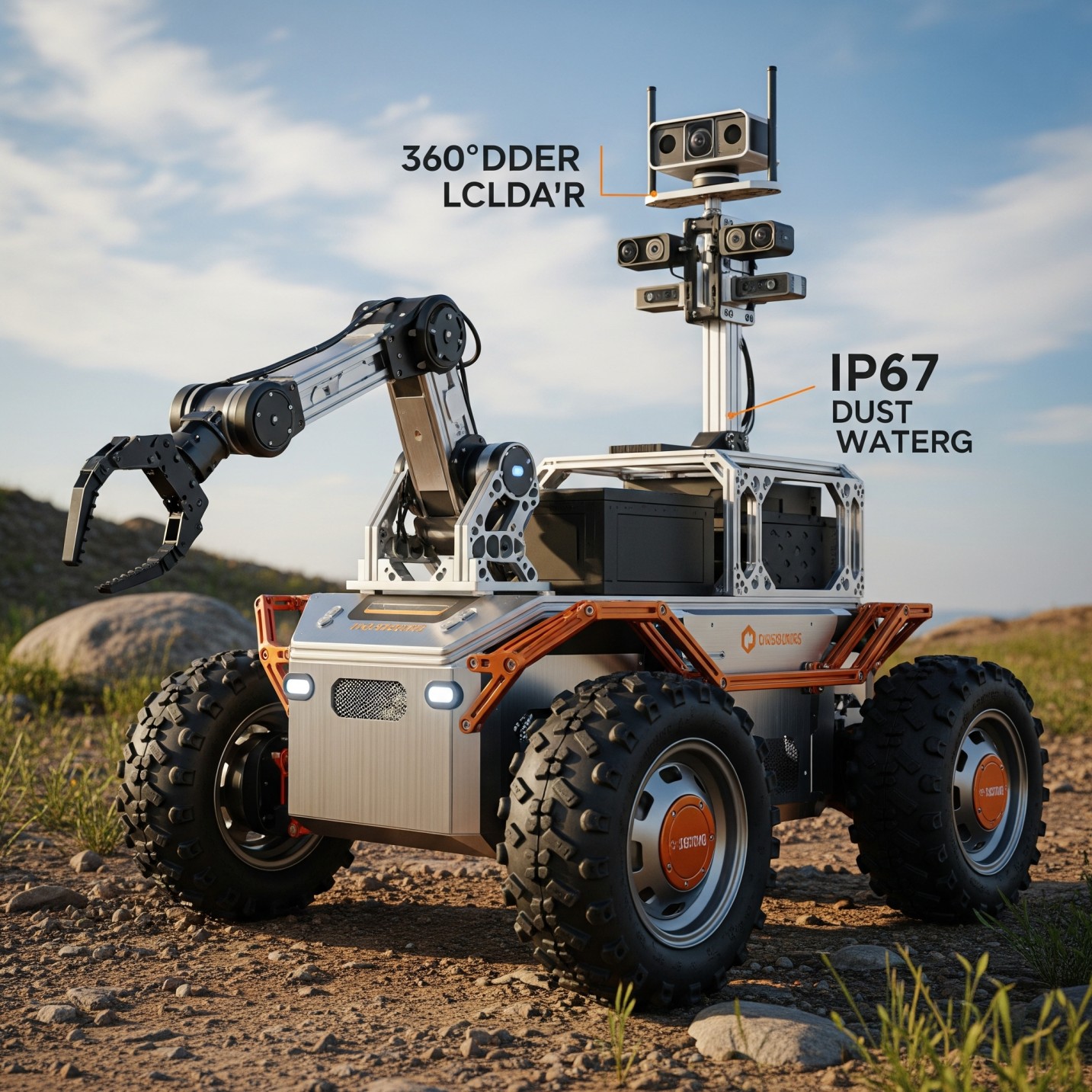
Wheeled Mobile Robots (WMRs): Use wheels for locomotion, which is highly efficient on prepared surfaces. Subtypes include differential drive, tricycle, and car-like (Ackermann) steering systems.
-
-
-
Legged Robots: Use articulated limbs to walk, run, or climb, allowing them to traverse complex and unstructured terrain. They are classified by the number of legs (e.g., biped, quadruped, hexapod).
-

-
Aerial Robots (Drones/UAVs): These robots operate in three-dimensional space.
-
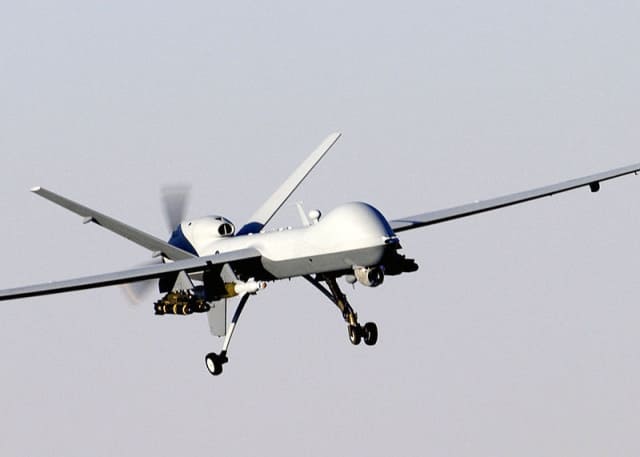
Fixed-Wing UAVs: Resemble traditional airplanes and are efficient for long-range surveillance and mapping.
-
-
-
Multi-rotor UAVs: Use multiple propellers for lift and control (e.g., quadcopters, hexacopters). They offer vertical takeoff and landing (VTOL) and hovering capabilities, making them ideal for inspection and photography.
-

-
-
Flapping-Wing UAVs: Bio-inspired robots that mimic the flight of birds or insects.
-
-
Autonomous Underwater Vehicles (AUVs): Un-tethered robots that operate underwater for tasks like oceanographic mapping, underwater infrastructure inspection, and scientific research.

-
Humanoid Robots: Robots designed to have a body structure resembling a human, including a torso, head, two arms, and two legs. They are a major research platform for studying bipedal locomotion, manipulation, and human-robot interaction (e.g., Honda's ASIMO, Boston Dynamics' Atlas).